
Disasters are costly but preparing for them doesn’t have to be. In fact, taking time to prepare now can help save you worry and cost, and give you peace of mind when an emergency occurs.
Take these simple steps now, that have little or no cost, to be better prepared for any disaster or emergency:
- Start Today Download Home Emergency Plan
- Know what kind of disasters and emergencies are most common for where you live
- Create your emergency communications plan. Record important contact and medical information about your family, which you then can share with others and store copies both digitally and on paper
- Make sure you store important phone numbers somewhere besides just your mobile phone
- Sign up for emergency and weather alerts to receive local and national information
- Build your emergency supply kit and emergency grab bag over time. Start with items you may already have in your home, like a torch, extra batteries, copies of important documents, water and non-perishable food. When you go to the supermarket, pick up an extra item each time that you use regularly, especially if it’s on sale!
- Talk with family or members of your household about where you will go if told to evacuate. Having a plan before disaster strikes can help you save precious time and money
- Store important documents and items like passports, birth certificates, maps and electronics in a flood-safe place like a high shelf or upper floor in resealable water-tight plastic bags to help waterproof them. Store important documents like insurance policies digitally
- Consider adding older clothing that still fits well to your disaster kit instead of donating it
- Look for deals at car boot sales and such like. You may find useful items like camping gear, tools, or cookware at a fraction of the retail price. Also, keep an eye out for seasonal sales on emergency supplies
- Contact your local fire station. They can help check and replace fire detectors
- Join our next community CPR or first aid course
- Read and keep our community resilience articles in The Link
- Volunteer to be part of our Community Resilience Group, or a ‘Street Champion’
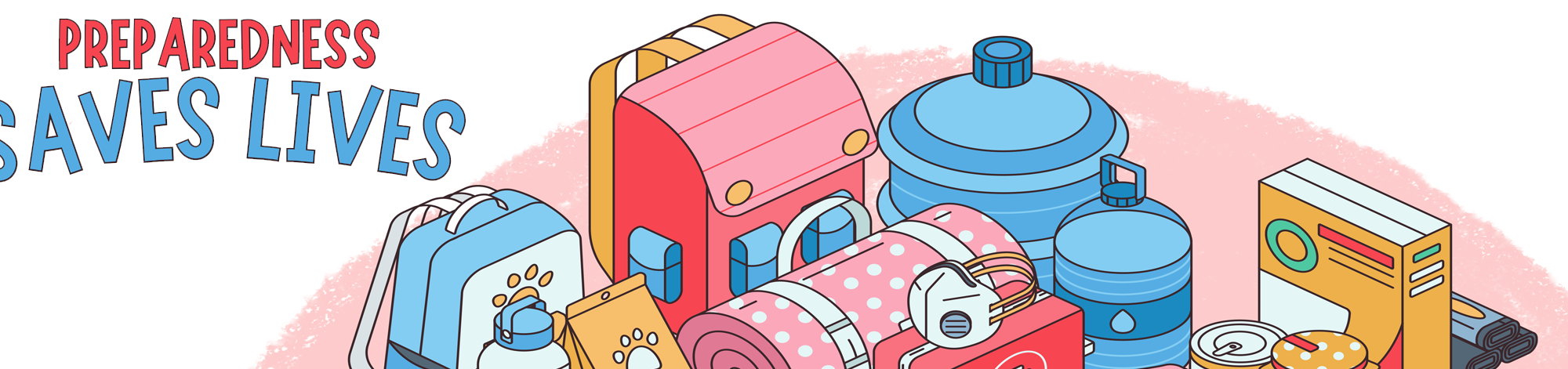
72-Hour Emergency Kit
A 72-hour emergency kit should contain enough supplies for everyone in your household to be self-sufficient for 72 hours without outside help. This includes essential items like water, food, first aid supplies, medication, and communication devices, and tools.
Here’s a more detailed breakdown of what to include in a 72-hour emergency kit:
- Water: At least one gallon of water per person per day for drinking and sanitation.
- Food: A 3-day supply of non-perishable, easy-to-prepare food.
- First Aid Kit: Include bandages, antiseptic wipes, pain relievers, and other necessary supplies.
- Medications: Make sure you have at least a 3-day supply at all times of all essential medications.
- Communication: A battery-powered or wind-up radio, and a mobile phone with chargers and a power bank.
- Torch: A reliable torch with extra batteries, or a wind-up torch.
- Tools: A multi-tool, wrench or pliers to turn off utilities.
- Cash: Notes and coins in case ATMs or credit cards are unavailable
By carefully selecting and stocking your 72-hour emergency kit, you can be better prepared to face unexpected situations
Emergency Grab Bag
An Emergency Grab Bag should hold items that would be essential if you had to leave your home at short notice.
In an emergency you may need to move quickly, so it’s important to have necessities at hand. Ideally, you should pack an easy-to-carry bag with essentials and store it in a safe place where everyone in your family can easily access it. At the very least, you should make an up-to-date list of things to put into your ‘grab bag’.
Your Grab Bag should contain a copy of your Home Emergency Plan and items which may help you in an emergency.
Items you put in the Grab Bag may change seasonally or be dependent on your needs as a household. It should be checked regularly to make sure perishable items are still in date and all information is up to date.
What to put in your Grab Bag
- A small first aid kit and medication
- Copies of important documents in a waterproof bag
- Copies of prescriptions for regular medication
- A battery torch with spare batteries or a wind-up torch
- A battery radio with spare batteries or wind-up radio
- Bottled water and some non-perishable (canned or dried) emergency foods. Don’t forget any special food needs.
- Can opener
- Notebook with pen and pencil
- Baby and small children supplies:
- Food, formula, drink
- Change of clothing
- Nappies
- Toys, books, activities
- Spare clothes
- Warm, wind and rainproof clothing including warm jumpers
- Strong outdoors shoes
- Sun hats, sunscreen
- Blanket, sleeping bag
- Spare sets of keys
- Mobile phone and charger and power bank
- Spare money (notes and coins)
- Spare contact lenses, glasses and hearing aids
- Hi-vis jackets or tabards
- Essential/prescribed medication, plus asthma and respiratory aids
- Basic toiletries e.g.: toothbrush, toothpaste, sanitary towels, anti-bacterial hand wipes/gel, toilet paper
- Any other items that might provide some comfort if you have to leave your home in a hurry
Other items to consider:
- Copies of insurance documents
- List of useful phone numbers
- Identity documents (passports/drivers licence/birth certificate)
- Rubbish bags
- Thermos flasks
- Pet supplies