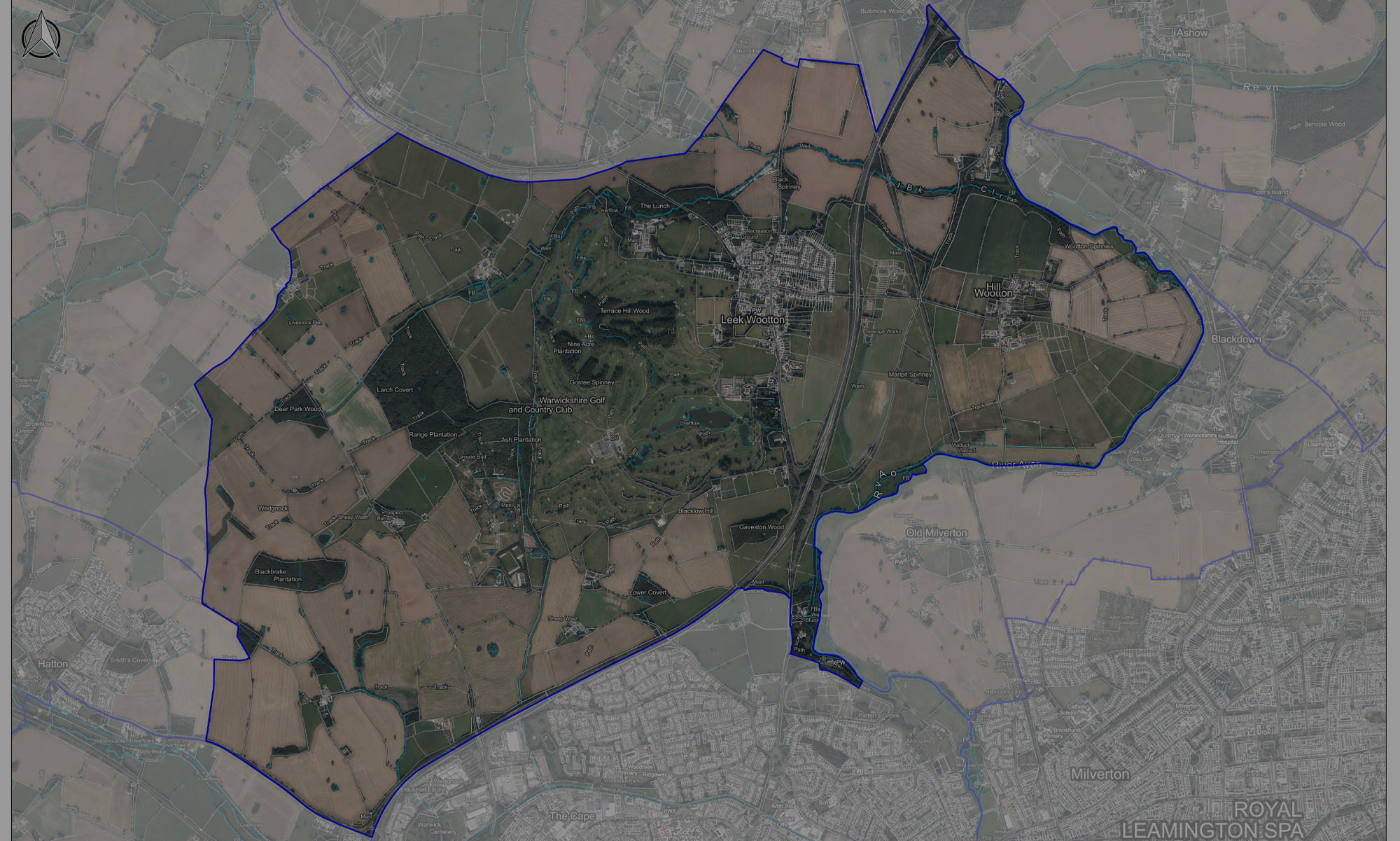

The Parish Council has responded to the South Warwickshire Local Plan Reg 19 Consultation as follows:
Leek Wootton & Guy’s Cliffe Parish Council objects to the allocation KEN.1 – Land to the South of Kenilworth.
The inclusion of this site at the scale proposed makes the South Warwickshire Local Plan unsound, failing multiple tests of soundness: justified, effective, and consistent with national policy.
1. The allocation is not justified
A plan is justified only if it is based on a proportionate evidence base and considers reasonable alternatives. KEN.1 fails this test for several reasons:
- Scale far exceeds the settlement’s functional capacity Kenilworth is a constrained historic town with limited transport capacity, limited employment land, and no realistic ability to absorb a strategic-scale new community without severe impacts on movement, landscape, and local services.
- Evidence base does not support a strategic expansion of this magnitude The Regulation 19 evidence does not demonstrate that Kenilworth is an appropriate or sustainable location for growth of this scale compared with other reasonable alternatives across South Warwickshire.
- Reasonable alternatives have not been properly assessed other locations with demonstrably better transport connectivity, employment proximity, and infrastructure capacity have not been fully explored or compared against KEN.1 in a transparent way.
2. The allocation is not effective
Effectiveness requires that the plan be deliverable over the plan period and based on effective joint working.
- Infrastructure requirements are unachievable within the plan period The level of transport, education, health, and utilities infrastructure required to support KEN.1 is not evidenced as deliverable. No funded or committed schemes exist to mitigate the impacts of hundreds of new dwellings.
- Transport impacts cannot be mitigated Kenilworth’s constrained road network, reliance on pinch points, and lack of strategic road capacity mean that the development would generate severe residual impacts—contrary to national policy.
- No credible phasing or delivery strategy the plan does not demonstrate how KEN.1 can be phased without causing unacceptable cumulative impacts on Kenilworth and surrounding settlements.
3. The allocation is not consistent with national policy
National policy requires plans to promote sustainable patterns of development, protect valued landscapes, and avoid severe transport impacts.
- Unsustainable pattern of development KEN.1 forces major growth into a location with limited employment opportunities, requiring significant out commuting and increasing car dependency.
- Landscape harm the site lies within sensitive landscape areas that contribute to the setting of Kenilworth and the wider South Warwickshire character and the separation of Kenilworth from the Villages and Hamlets of the adjacent Parishes. The scale proposed is incompatible with safeguarding landscape character, contrary to NPPF requirements.
- Failure to avoid severe transport impacts the evidence does not demonstrate that the impacts on the A46, local junctions, Kenilworth’s internal network, and the road system in and around Leek Wootton can be mitigated to acceptable levels.
4. The scale of KEN.1 undermines the soundness of the entire plan
The SWLP relies heavily on KEN.1 as a major growth location. Because the allocation is neither justified nor deliverable, the plan’s overall spatial strategy collapses. The plan becomes:
- Over dependent on a single undeliverable site
- Unable to meet housing and employment needs in a sustainable pattern.
- Structurally unsound because its growth strategy is not achievable. If KEN.1 cannot be delivered at the scale proposed, the plan cannot meet its stated objectives or housing trajectory. This renders the entire SWLP unsound.
Action to Make Plan Sound
To render the Plan sound, the allocation must be either (a) removed or significantly reduced in scale, or (b) amended to include binding, enforceable policy requirements obliging developers to fully fund and deliver all necessary transport infrastructure upgrades prior to occupation, secured through legally binding mechanisms such as Section 106 agreements or other similar enforceable conditions.